
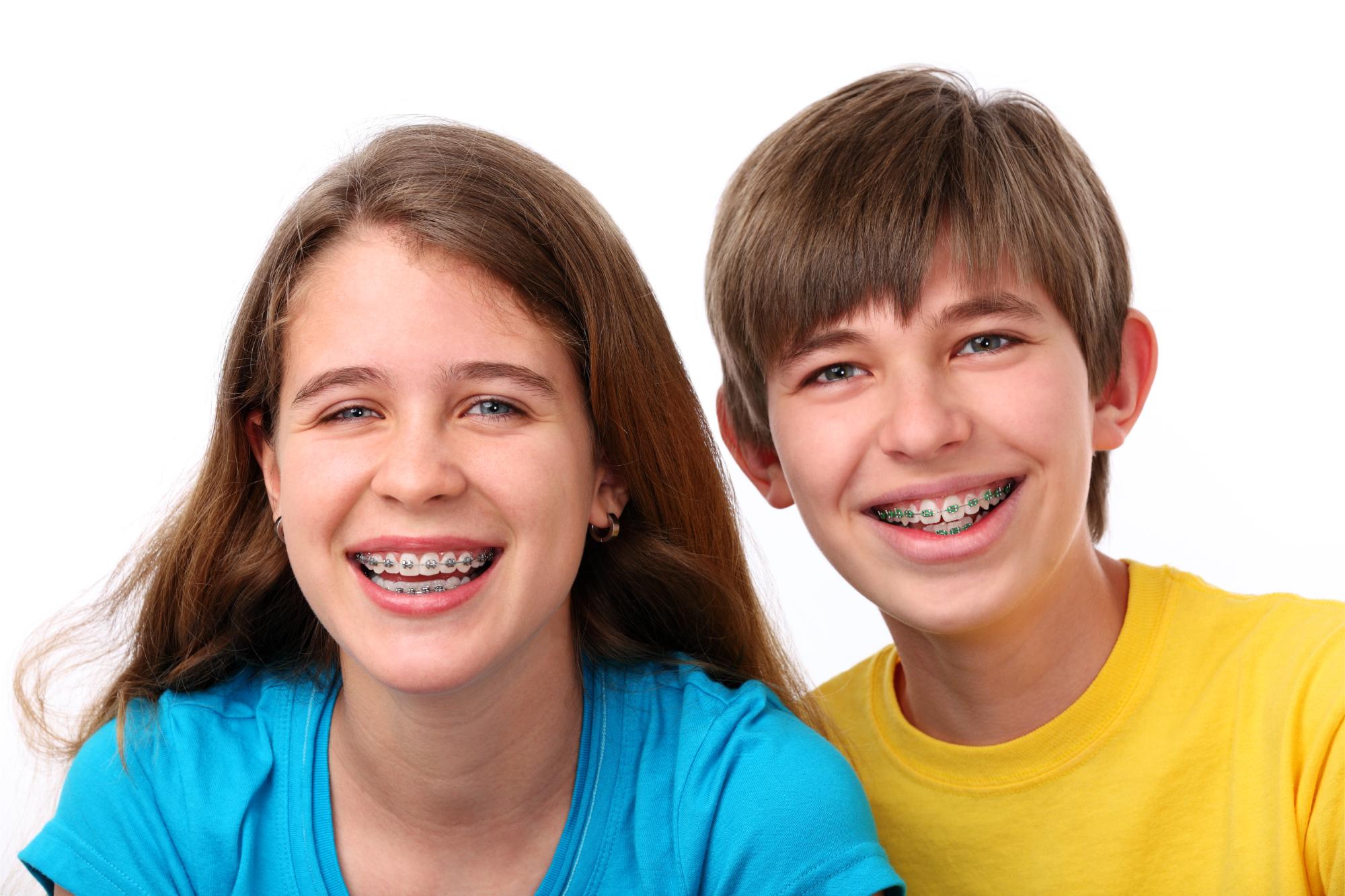
Most kids get braces between ages 9 and 14, once most permanent teeth have erupted and the jaw is still developing. The American Association of Orthodontists recommends a first orthodontic evaluation by age 7 to spot issues early. So when parents ask what age their kids should get braces, the honest answer is: it depends on your child’s growth and bite.
That early visit doesn’t always mean early treatment. In many cases, Dr. Balhoff simply monitors growth, tracks incoming permanent teeth, and recommends braces when the timing will give your child the best result. Good timing depends on jaw growth, tooth eruption patterns, and the specific issue being corrected. Some bite problems are actually easier to fix while the jaws are still pliable, while others are best handled once most adult teeth have arrived.
At Balhoff Orthodontics, we walk parents through this decision step by step, working toward a healthy, beautiful smile achieved at the right moment in your child’s development. Families across the area trust our team to give them straight answers about when the time is right.
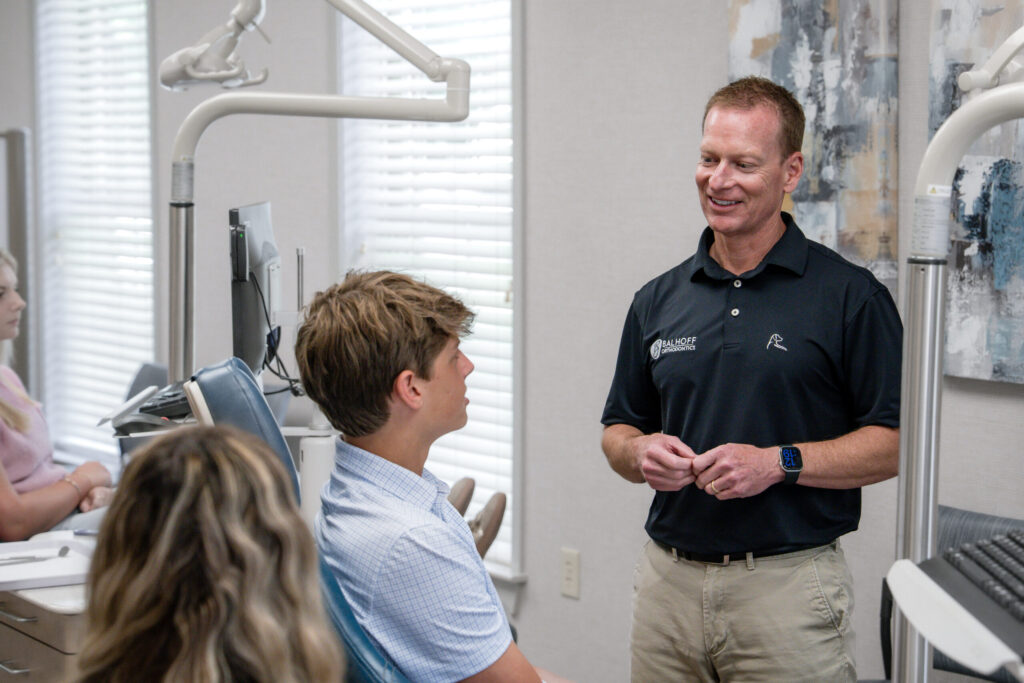
What Age Should Kids Get Braces? How Orthodontic Timing Works
Orthodontic timing follows a predictable arc. The first evaluation happens around age 7, Phase 1 (interceptive) treatment may start between ages 6-10 for select issues, and Phase 2 (complete) treatment typically begins between ages 11-14 once most adult teeth are in. Most treatment plans run 12-24 months depending on the complexity of the case.
Here’s how the process usually unfolds:
- Age 7 first visit. Enough permanent teeth have erupted for Dr. Balhoff to spot developing bite and spacing concerns, including crossbites, crowding, and jaw growth differences.
- Growth monitoring. If your child isn’t ready for braces yet, we schedule no-obligation check-ins every six to twelve months to track development.
- Phase 1 (if needed). Also called two-phase treatment, this interceptive stage uses appliances or partial braces to guide jaw growth and create room for permanent teeth.
- A short rest period. Between phases, we let the remaining baby teeth fall out and adult teeth come in.
- Phase 2 treatment. Full braces for teens or Invisalign® clear aligners straighten the smile and refine the bite.
Some kids skip Phase 1 entirely and go straight to complete treatment in early adolescence. Others benefit from early intervention. The right path depends on what we see during that first visit.
Benefits of Getting Braces at the Right Age
Treating your child during active growth gives Dr. Balhoff a real advantage. When braces are timed well, bones respond more readily, teeth tend to move more predictably, and habits like thumb sucking or mouth breathing can be corrected before they cause lasting changes. The payoff is often a smoother treatment and a more stable result.
Key benefits of well-timed orthodontic treatment include:
- Easier jaw guidance. Active growth lets us shape the upper and lower jaws while they’re still developing.
- Possibly fewer extractions and lower surgical risk. Early correction may reduce or eliminate the need for tooth removal or jaw surgery later.
- Better bite function. A properly aligned bite supports clearer speech, easier chewing, and simpler brushing and flossing.
- Stronger confidence. Kids gain self-assurance during formative school and social years when their smile feels right.
- Shorter overall treatment. Catching issues at the right moment can reduce total time in braces or aligners.
Parents often tell us their child smiles more freely in photos and speaks up more in class after treatment. That confidence boost, paired with long-term oral health benefits, is exactly why timing matters so much for families across Lafayette who want lasting results.
Types of Braces for Kids: Comparing Your Options
Today’s kids have more choices than ever. At Balhoff Orthodontics, Dr. Balhoff offers traditional metal braces, clear ceramic braces, and self-ligating braces, plus Invisalign® clear aligners for teens. The best option depends on your child’s age, the severity of the issue, and how disciplined they’ll be with care instructions.
Here’s a quick comparison:
TADs (Temporary Anchorage Devices) may also be used alongside braces in select cases to allow precise tooth movement without bulky appliances. Dr. Balhoff can help you determine if these would help your child’s treatment for added efficiency and comfort or as an alternative to headgear.
When you visit our Lafayette office, we’ll walk through each option, show you what treatment would look like for your child, and help your family choose the right fit for our newest member of our orthodontic family.
How Much Do Kids Braces Cost? Factors to Consider
The cost of kids braces depends mainly on three things: treatment type, case complexity, and how long your child will be in active treatment. Metal braces typically sit at the most affordable end, while clear aligners and ceramic options often cost more. Two-phase treatment may carry separate fees for each phase, and add-ons like TADs or specialty appliances can affect the total.
When estimating cost, consider these factors:
- Treatment type. Metal braces are typically the most economical, while clear aligners and ceramic options often cost more.
- Case complexity. Mild crowding takes less time and fewer appointments than significant bite correction.
- Length of treatment. Longer cases involve more adjustments and supplies.
- Phase structure. A child needing both Phase 1 and Phase 2 will have two treatment periods, though Phase 2 is often shorter.
- Insurance benefits. Many plans include a lifetime orthodontic benefit for dependents.
Most dental insurance plans cover a portion of orthodontic care for children, and flexible payment options make care manageable for most families. Families deserve clear, upfront numbers, so we provide a personalized estimate before any treatment begins, which means no surprises down the road and a plan that fits your household budget.
Signs Your Child May Be Ready for Braces
Some signs are easy to spot at home. Others only show up on an orthodontic exam. Either way, paying attention to your child’s bite and tooth development helps you bring them in at the right moment.
Watch for these common signals:
- Crowded, crooked, or overlapping teeth as permanent teeth come in
- Difficulty chewing or biting, or persistent mouth breathing
- Early, late, or irregular loss of baby teeth compared to siblings or classmates
- Thumb sucking past age 5, or a jaw that shifts, clicks, or pops when opening
- A visible overbite, underbite, crossbite, or open bite when your child smiles or closes their teeth
- Teeth that don’t meet properly when the back teeth are together
- Speech changes linked to tooth position
Noticing one or more of these doesn’t automatically mean braces. It does mean it’s time for an evaluation. Dr. Balhoff and our team will give you a clear, honest assessment, and if treatment isn’t needed yet, we’ll simply keep an eye on things until it is. Parents across Lafayette appreciate that we never push treatment before a child is truly ready for it.
Frequently Asked Questions About Kids and Braces
What is the youngest age a child can get braces?
Most children who need braces start between ages 9 and 14, but Phase 1 interceptive treatment can begin as early as age 6 or 7 in select cases. These early treatments use limited braces or appliances to correct specific issues like crossbites or severe crowding. The American Association of Orthodontists recommends a first evaluation by age 7 to determine if early action would help.
How long does my child have to wear braces?
Treatment usually lasts 12-24 months, though the exact timeline depends on the complexity of the case. Simple alignment cases may finish sooner, while bite corrections or two-phase treatment plans can run longer. Dr. Balhoff will share an estimated timeline when your family visits, so you know exactly what to expect from start to finish.
Are there food restrictions with braces?
Yes. Kids with traditional metal braces, clear ceramic braces, and self-ligating braces should avoid hard, sticky, and chewy foods that can break brackets or bend wires. Think popcorn kernels, hard candy, ice, caramel, and crunchy nuts. Soft foods, cut-up fruits and veggies, and most everyday meals are perfectly fine. Invisalign® users simply remove their aligners to eat.
Does my child need braces if their teeth look straight?
Possibly. Some bite issues like crossbites, deep bites, and jaw alignment problems aren’t obvious from the front. A child can have straight-looking teeth and still benefit from orthodontic treatment for function, long-term health, or jaw growth guidance. A quick evaluation will tell you for sure.
What happens after braces come off?
After the braces come off, your child wears a retainer to keep teeth in their new position. Retainers can be removable or bonded behind the teeth, and we’ll walk your family through the wear schedule. Consistent retainer use is the single most important factor in keeping that healthy, beautiful smile for life. Our team at our Lafayette office is always ready to answer retainer questions whenever they come up, because we treat every child like part of our entire orthodontic family.
Ready to See If It’s the Right Time for Your Child?
If you’re wondering whether your child is ready for braces, the next step is simple. Schedule a complimentary free consult at our Lafayette office. Dr. Balhoff will examine your child’s teeth, take digital scans, and give you a clear, no-pressure assessment of what (if anything) to do next. Call (337) 761-7070 or book online to reserve your visit.