
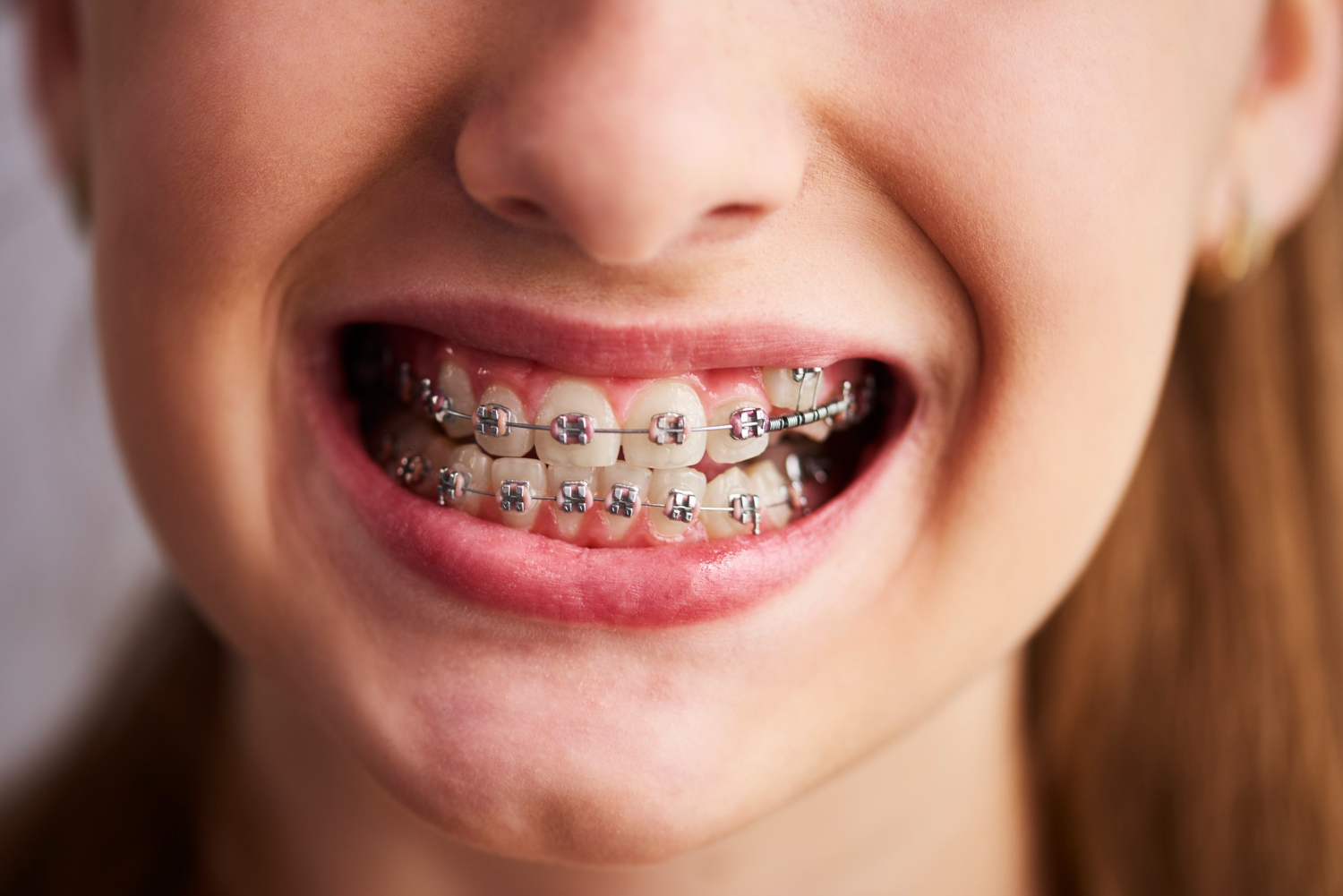
Braces improve the appearance of your smile and the health of your bite, and the question almost everyone asks first is about timing. When is the right time for braces? The honest answer is that it depends on age, on how the jaw is developing, and on what the teeth are actually doing. Here is how the timing works for kids, teens and adults.
Braces for Kids: Starting Early for Long-Term Benefits
Early orthodontic intervention, often called interceptive orthodontics, identifies and addresses dental issues before they become more complex. The American Association of Orthodontists recommends that children have their first orthodontic evaluation by age 7. That may seem young, but early assessments let us:
- Detect potential problems like crowding, crossbites, or jaw misalignments.
- Guide the growth of jawbones to accommodate permanent teeth.
- Create more room for crowded teeth and reduce the risk of extractions later.
In many cases kids do not need braces at 7. They just need someone watching. Early interceptive treatment might mean an appliance like a spacer or a palatal expander rather than full braces, which makes the later treatment shorter and simpler when it does come.
Signs your child might need braces include:
- Early or late loss of baby teeth.
- Difficulty chewing or biting.
- Breathing through the mouth.
- Thumb-sucking after age 5.
- Crowded, crooked, or protruding teeth.
Addressing these early sets your child up for a healthier and more confident smile as they grow.
Braces in the Teen Years: The Most Common Time for Treatment
The teenage years are the most common time to start. By this stage most of the permanent teeth have erupted and the jaw is still growing, which makes it an efficient window for correction. Teens can choose traditional metal braces, clear ceramic braces, or Invisalign for teens, depending on their case and how they live day to day.
Why this stage works so well:
- Teeth and jaws are still adaptable, so corrections happen faster and more efficiently.
- Treatment can address a wide range of issues, from crowding to gaps and overbites.
- Many teens are motivated to improve their smiles as they become more socially active.
Orthodontics has come a long way, and options like colored bands or removable aligners make the process feel more personal. Our page on braces for teens in Lafayette covers the treatment itself in detail, from the first scan through the day the braces come off.
Braces for Adults: It Is Never Too Late
Orthodontic treatment is not just for kids and teens. Adults make up a significant portion of orthodontic patients today. Whether you have always wanted straighter teeth or you have developed bite issues later in life, braces still work.
Why adults start treatment:
- To fix shifting teeth caused by aging or previous orthodontic work that was never finished.
- To address bite issues that lead to jaw pain or uneven wear on the teeth.
- To improve confidence in how their smile looks.
Adult treatment often leans toward discreet options like Invisalign in Lafayette or clear braces, which fit more comfortably around work and social life. Treatment can run slightly longer than it does for a teenager because the jaw is fully developed, but the results hold just as well. We treat patients across every stage through our orthodontic care for all ages.
Braces by Age: What to Expect at Each Stage
There is no single best age for braces, but there are stages where certain things become possible. Here is roughly how it maps out.
- Age 7. First evaluation. Most children who come in at 7 leave without braces. The point is to catch crossbites, severe crowding, and jaw growth problems while there is still time to steer them.
- Ages 8 to 10. The window for early treatment if it is needed. Expanders, spacers, or a short first phase of partial braces can create room before the permanent teeth arrive. This is not the norm, it is for specific problems.
- Ages 11 to 14. The most common starting range. Enough permanent teeth are in to treat the full bite, and there is still growth left to work with.
- Ages 15 to 17. Still a strong window. Growth is slowing but the response to treatment is good, and many teens prefer starting here so they finish before graduation.
- Adults. No upper limit. Healthy teeth and gums matter far more than age. Treatment may take a bit longer and some bite corrections need a different approach, which we would go through at your consultation.
Parents looking specifically at younger children can go deeper in our guide to what age kids should get braces.
Factors to Weigh When Choosing the Right Time
No matter your age, a few things shape the decision:
- Oral health needs. Crowding, spacing, and misalignment affect more than appearance. They contribute to cavities, gum disease, and difficulty chewing.
- Growth stage. Children may benefit from early intervention, while teens and adults are usually treated comprehensively in a single phase.
- Lifestyle and preferences. Removable aligners suit people who want treatment to stay invisible. Fixed braces suit people who would rather not think about compliance.
- Practical logistics. Many dental plans include orthodontic benefits, and our team verifies coverage before treatment starts. Appointment frequency is worth factoring into school and work schedules too.
With a personalized approach, patients of all ages get the care they need at the point where it will do the most good.
Frequently Asked Questions About Braces Timing
What is the best age for braces?
For most people it falls between 11 and 14, once enough permanent teeth have come in and the jaw is still growing. That said, the best age is really whichever age the problem is easiest to correct, and that varies. A child with a severe crossbite may be better treated at 9. An adult who never had treatment is not too late at 45.
Can a 7 year old get braces?
They can, but most do not need to. Age 7 is the recommended age for a first evaluation, not for treatment. What we are looking for at that visit is whether the jaw and incoming teeth are heading somewhere that will cause trouble. If they are, a short early phase may start soon after. If not, we simply monitor until the timing is right.
Is 8 too young for braces?
Not automatically. Ages 8 to 10 are the usual window for early or interceptive treatment when there is a specific reason for it, like severe crowding or a jaw that is developing unevenly. Full braces at 8 are uncommon. Partial braces or an appliance for a limited period are much more typical.
Do all the baby teeth have to fall out before braces?
For comprehensive treatment, most of them do. Braces need permanent teeth to hold onto and move predictably. Early treatment is the exception, since it works around baby teeth on purpose to guide what comes next.
Is it too late to get braces as an adult?
No. Teeth respond to steady pressure at any age. What matters is the health of the teeth, gums, and supporting bone rather than the number. Adults do sometimes need a slightly longer treatment period, and severe skeletal issues can call for a combined approach, but neither one rules treatment out.
Take the First Step Toward a Healthier Smile
If you are considering braces for yourself, your teen, or your child, the useful next step is a conversation with an orthodontist who can look at the actual teeth rather than guess from a chart. At Balhoff Orthodontics, Dr. Donald Balhoff reviews every case personally and gives you a straight answer about whether now is the right time or whether waiting makes more sense.
Schedule a free consult at our Lafayette office and take the first step toward a healthier, more confident smile.