
Are ceramic braces a good option for adults? For a lot of them, yes. Adults who want the precision and control of fixed braces without the obvious look of stainless steel often find ceramic brackets to be the right middle ground, and Dr. Donald Balhoff sees that request from working professionals almost every week at Balhoff Orthodontics. If you have been quietly researching your options, the questions below are the same ones our team fields at the chair, and the answers tend to be more encouraging than most people expect before they sit down.
What Are Ceramic Braces?
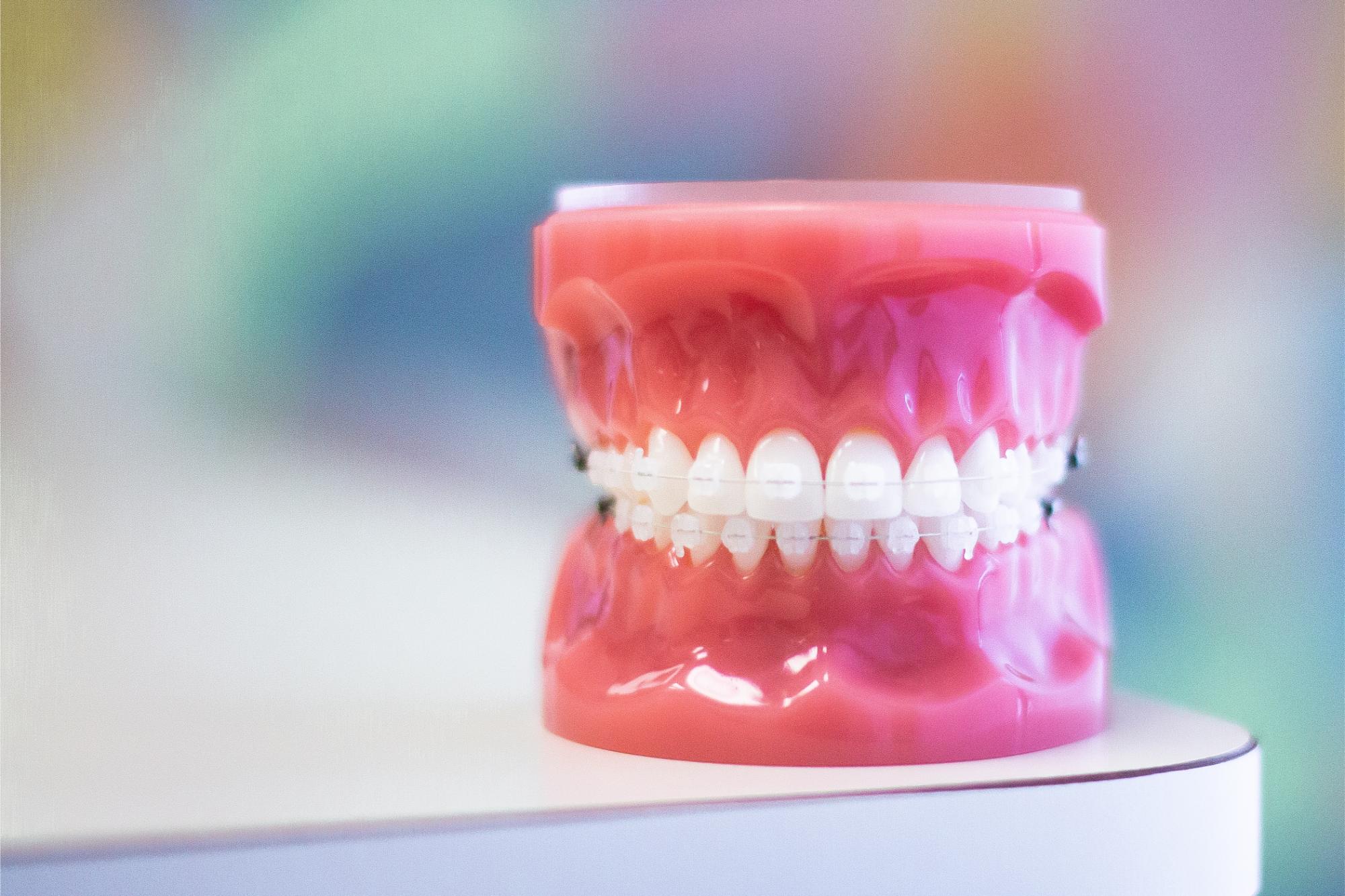
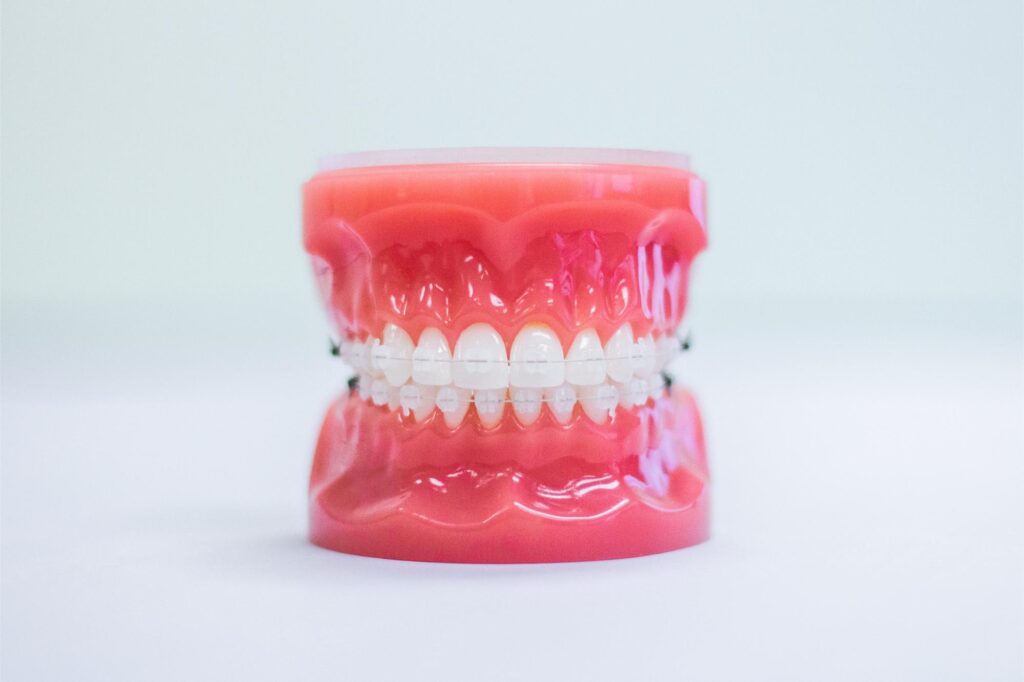
Ceramic braces are fixed orthodontic appliances that use tooth-colored or clear brackets bonded to the front of each tooth and connected by an archwire. They straighten teeth the same way metal braces do, but the brackets blend with natural enamel, making them far less noticeable in conversation and photographs. Our overview of how ceramic braces work covers the basics for any age.
The brackets are made from polycrystalline or monocrystalline ceramic, one with a soft frosted look that matches most enamel shades, the other closer to genuinely clear. Dr. Balhoff selects the shade that disappears best against your own tooth color, since enamel varies quite a bit from person to person.
Visibility can be reduced even further with a few small choices. Clear or frosted elastic ties instead of colored ones, and tooth-colored or coated archwires, soften the overall appearance of the appliance. The result is a treatment that friends and coworkers frequently do not notice until you point it out.
Mechanically, nothing is compromised. Ceramic braces are still fixed to your teeth, still work around the clock, and still give your orthodontist direct control over every tooth in the arch. That combination of discretion and control is exactly why they remain popular with adults, and it is what we build our clear braces treatment around.
How Ceramic Braces Move Adult Teeth
Ceramic braces move adult teeth through continuous light force. Each bracket is bonded to a tooth, an archwire is seated into those brackets, and the wire’s tendency to return to its original shape gently guides teeth into better positions. Adjustments every 4 to 8 weeks reshape the arch and correct bite relationships over time.
Here is how a typical adult case unfolds:
- Records and planning. Digital scanning with our iTero Element scanner, photos, and imaging give Dr. Balhoff a full picture of your bite.
- Bonding day. Ceramic brackets are placed on each tooth and the first archwire is inserted. Most people describe the visit as long but easy.
- Progressive wire changes. Wires increase in stiffness as treatment advances, first leveling and aligning, then closing spaces and refining the bite.
- Auxiliaries as needed. Elastics, TADs, or other appliances may be added to correct rotations, deep bites, or midline shifts that wires alone cannot address.
- Retention. Retainers follow active treatment to hold the finished result, and our guide to life after braces walks through what that stage looks like.
Adult bone remodels more slowly than a growing teenager’s, so an adult case can run a little longer than the same case in a fourteen-year-old. Most adult ceramic treatment falls between 18 and 30 months, though simple alignment cases finish sooner and complex bite corrections take longer. Your treatment length depends on your starting point, not on the color of the brackets.
Benefits of Ceramic Braces for Adults
Adults choose ceramic for reasons that are part clinical and part practical:
- Discretion at work. Attorneys, teachers, sales professionals, and anyone who presents to a room appreciate brackets that photograph quietly instead of flashing silver.
- No compliance required. Because they are fixed, ceramic braces work whether or not you remember anything. There is no tray to forget in a napkin at lunch.
- Control over difficult movements. Severe rotations, significant crowding, and certain bite corrections respond well to fixed appliances that grip every tooth directly.
- Stain-resistant brackets. The ceramic itself resists discoloration. The clear elastic ties are what can pick up color, and those are replaced at every adjustment visit.
- Timeline comparable to metal. In most adult cases, ceramic braces finish in roughly the same window as metal braces treating the same bite.
- A finish you can trust. Fixed appliances let Dr. Balhoff verify tooth position at each visit rather than waiting for a tray sequence to play out.
For adults who have spent years wishing they had done something about their smile, that combination tends to be persuasive. A healthy, beautiful smile shouldn’t require announcing your treatment to every client on your calendar.
Ceramic Braces vs. Metal Braces vs. Invisalign for Adults
Each of the three main adult options trades something for something else.| Feature | Ceramic Braces | Traditional Metal Braces | Invisalign Clear Aligners |
|---|---|---|---|
| Visibility | Low, brackets blend with enamel | High, visible stainless steel | Lowest, nearly invisible trays |
| Durability | More brittle, brackets can chip or fracture | Strongest option available | Trays can crack but are easily replaced |
| Treatment time | Similar to metal in most adult cases | Often the fastest for severe cases | Depends heavily on wear time |
| Removability | Fixed, removed by Dr. Balhoff at the end | Fixed | Removable for meals and brushing |
| Daily care | Careful brushing around brackets, avoid hard foods | Careful brushing around brackets | Clean trays daily, 20 to 22 hours of wear |
| Best suited for | Adults wanting fixed control with discretion | Complex or severe corrections | Mild to moderate cases with disciplined wear |
A few clinical notes are worth understanding before you choose.
Ceramic brackets are slightly larger than metal brackets, which some adults notice against the lip for a week or two. In deep-bite cases, ceramic can also be abrasive against opposing enamel. That is why Dr. Balhoff sometimes recommends a hybrid setup, with ceramic on the upper arch where visibility matters most and traditional metal braces on the lower arch where durability counts for more.
Invisalign clear aligners remain an outstanding option for the right bite, and Balhoff Orthodontics is a gold plus provider of Invisalign. The deciding factor is usually your case complexity and your honest assessment of how consistently you would wear trays.
Who Is a Good Candidate for Ceramic Braces?
Good candidates share a few characteristics:
- Healthy gums and teeth. Active decay or untreated gum disease must be resolved before brackets are bonded. Braces move teeth, they don’t fix cavities.
- A preference for appearance without giving up fixed control. If you want brackets to disappear but your bite needs the precision of a wire, ceramic is the natural answer.
- Realistic expectations about ties. Heavy coffee, tea, red wine, curry, or tobacco use can tint clear elastic ties between visits. The brackets stay clear, the ties get changed every appointment.
- A bite without an extreme deep overbite. Very deep bites can bring lower teeth into contact with upper ceramic brackets, so metal on the lower arch is often the smarter call.
- No high-contact athletics, or a willingness to wear a mouthguard. Contact sports favor metal brackets for sheer durability.
The only way to know for certain is imaging and an exam at our Lafayette office. Bite depth, root position, and enamel thickness all factor into the recommendation, and those aren’t things you can assess in a bathroom mirror.
Why Adults Trust Dr. Balhoff With Fixed Treatment
Dr. Donald Balhoff earned his Bachelor of Science degree from the University of Notre Dame in 1995, his Doctor of Dental Surgery degree from Louisiana State University School of Dentistry in 1999, and his orthodontics specialty certification from Nova Southeastern University College of Dental Medicine in 2001. He founded Balhoff Orthodontics in Lafayette, LA, in 2004 to provide the highest level of orthodontic and dental excellence possible.
He maintains membership in the American Association of Orthodontists, the American Dental Association, the Southern Society of Orthodontists, the Louisiana Dental Association, and the Acadiana District Dental Association. Over 20 years of service have gone into building an enjoyable, caring, and energetic atmosphere where adults feel as welcome as the twelve-year-olds in the next chair. Our Lafayette office was built around meticulous service and quality care for our entire orthodontic family, which for adults means straight answers about tradeoffs and timelines before a single bracket is bonded.
A significant share of orthodontic patients today are adults, which is worth remembering if you have been telling yourself you missed your window. You didn’t. We treat every stage through our orthodontic care for all ages.
Frequently Asked Questions About Ceramic Braces for Adults
Do ceramic braces stain?
The ceramic brackets themselves resist staining and stay clear throughout treatment. What can discolor are the small elastic ties that hold the wire in place, especially with heavy coffee, tea, red wine, or curry consumption. Those ties are replaced at every adjustment visit, so any tint is temporary.
Are ceramic braces more uncomfortable than metal braces?
The pressure sensation is essentially the same. Teeth feel tender for two or three days after bonding and for a day or so after each wire change, then settle down. Ceramic brackets are slightly bulkier, so your lips and cheeks may take an extra few days to adapt at the start.
How long do adults wear ceramic braces?
Most adult ceramic cases fall between 18 and 30 months. Simple crowding resolves faster, while bite correction, extraction cases, or treatment involving TADs takes longer. Adult bone remodels more slowly than a teenager’s, which is why adult timelines can run a bit past what a younger patient would need.
Do ceramic braces break more easily than metal?
Yes, ceramic is more brittle than stainless steel, so a bracket can chip or fracture under heavy force. Hard candy, ice, nuts, and crusty bread are the usual culprits. Cutting firm foods into smaller pieces and chewing with your back teeth prevents most breakages entirely, and knowing which foods are safe with braces handles the rest.
Are ceramic braces worth it for adults?
For adults who want the reliability of fixed appliances without obvious hardware, they usually are. You get the precision of braces, no daily wear requirement, and an appliance that stays quiet in meetings and photographs. The tradeoff is the need for a little more care around hard foods.
Can ceramic braces be used on all teeth?
They can, but they aren’t always the best choice for every tooth. Upper arches are the most common application, since that’s where visibility matters. In deep-bite cases, metal brackets on the lower arch protect opposing enamel and hold up better, and they’re barely visible behind the lower lip anyway.
Talk It Through Before You Decide
If you have been quietly considering straightening your teeth but weren’t sure what it would look like day to day, a conversation is the easiest place to start. Book a free consult with imaging so you can see your options side by side, and our team will explain exactly what ceramic braces would mean for your bite and your timeline. Whenever you’re ready, we would be glad to welcome you into our orthodontic family.